Mezuzah Blog

The Mezuzah on the Right and the Hanukkah Menorah on the Left

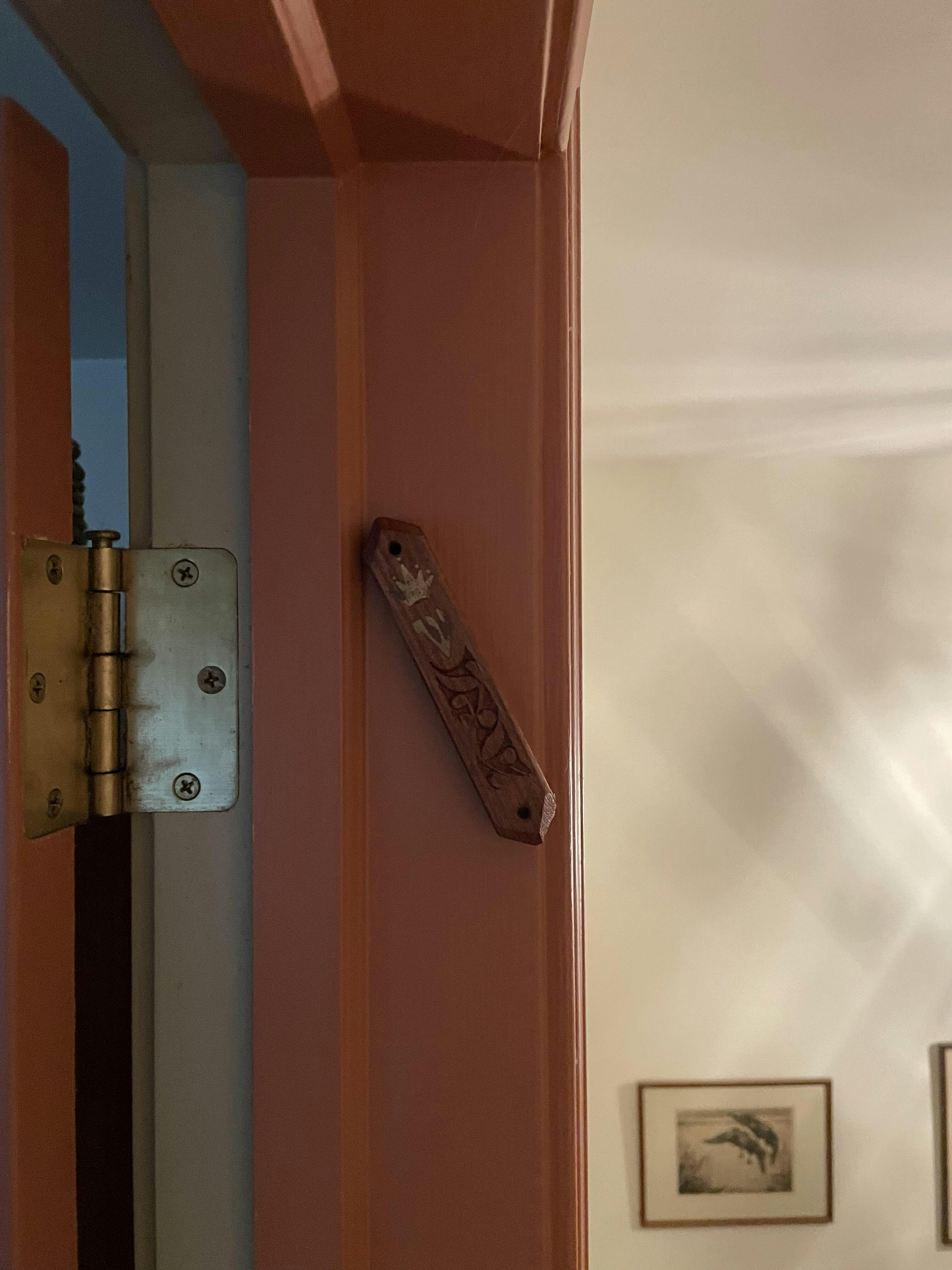
The Talmud in Tractate Shabbat states that one should place the Hanukkah Menorah to the left of the door and the Mezuzah to the right. This is referring to the original custom where people would light their Menorahs outside their front door to the left of the door. They would place the Menorah very low to the ground in order to make it perfectly clear that the lights were not for our use, but only to publicize the Hanukkah miracle. By having the Mezuzah on one side and the Menorah on the other side, you would be surrounded by Mitzvot (good deeds) when you entered your home. 

Hanukkah Menorah on the left and mezuzah on the right

Later during medieval times it became unsafe to light the Menorah outside the house where all could see it. It became customary in most places to light the Menorah inside the home. At least the miracle would be publicized in this way to one's own family and friends, if not to the world at large. 

Today in Jerusalem and many other places in Israel, it is still customary to light the Menorah on the outside to the left of the door, opposite the Mezuzah.

The Dedication of the Temple

There is another connection between the Hanukkah Menorah and the Mezuzah. It is the idea of dedication. The Menorah commemorates the re-dedication of the Temple in Jerusalem after it had been defiled and turned into a pagan temple by the Seleucids (Greek speaking Syrians). The oil for the Menorah of the Temple should have lasted only one day but it lasted eight allowing for the production of new ritually pure oil. The eight candles of our Menorah commemorate this re-dedication miracle. In fact the word "Hanukkah" means "Dedication" in Hebrew.

Now that we have no Temple, we are taught in the Talmud that God dwells in the synagogues and in the homes of those who dedicate their home to God. This is one of the reasons why we put Mezuzahs on each and every door of our home. By placing a Mezuzah on each room, we show that our home is dedicated to the service of God.

A Mezuzah - The Perfect Hanukkah Gift!

Giving gifts on Hanukkah is not an original Jewish custom. It is something that has developed in America mostly as a Jewish response to Christmas presents. American Jews did not want their children to feel left out of the gift receiving of the holiday season and thereby be attracted to other religions. 

But the gift of a Mezuzah is actually in keeping with the true spirit of Hanukkah which is all about rededicating our lives to service of God. What better gift can you give for Hanukkah than one which so perfectly expresses the spirit of the holiday? 

Mezuzahs are also a great Hanukkah gift since they come in so many styles and colors that allow you to buy something that fits the taste of the recipient. Also since many people don't have Mezuzahs on every door of their home, they can always use another one.


Continue Reading ›

This one is definitely part of our 'Mezuzahs in Unusual Places" series.

The new state-of-the-art La Paz Medical Center has just been inaugurated in Equatorial Guinea by placing a Mezuzah on the front door. You may be wondering what a hospital in the poverty ridden former Spanish colony is doing with a Mezuzah on the front door.

Mezuzah on African Hospital

The hospital in the port city of Bata has been opened with a lot of help from and Israeli businesswoman named Yardena Ovadia. She has close ties to President Teodoro Obiang. In addition the hospital has many Israeli staff members.

Because of this Rabbi Shlomo Bentolila of Chabad of Central Africa was invited to affix a Mezuzah to the front door of the medical center.

You can read more about this, and see a lot more pictures here.

Photo credit: Israel Bardugo/Collive.com

Mezuzah on African Hosptial


Continue Reading ›

It's not as simple as you might think...

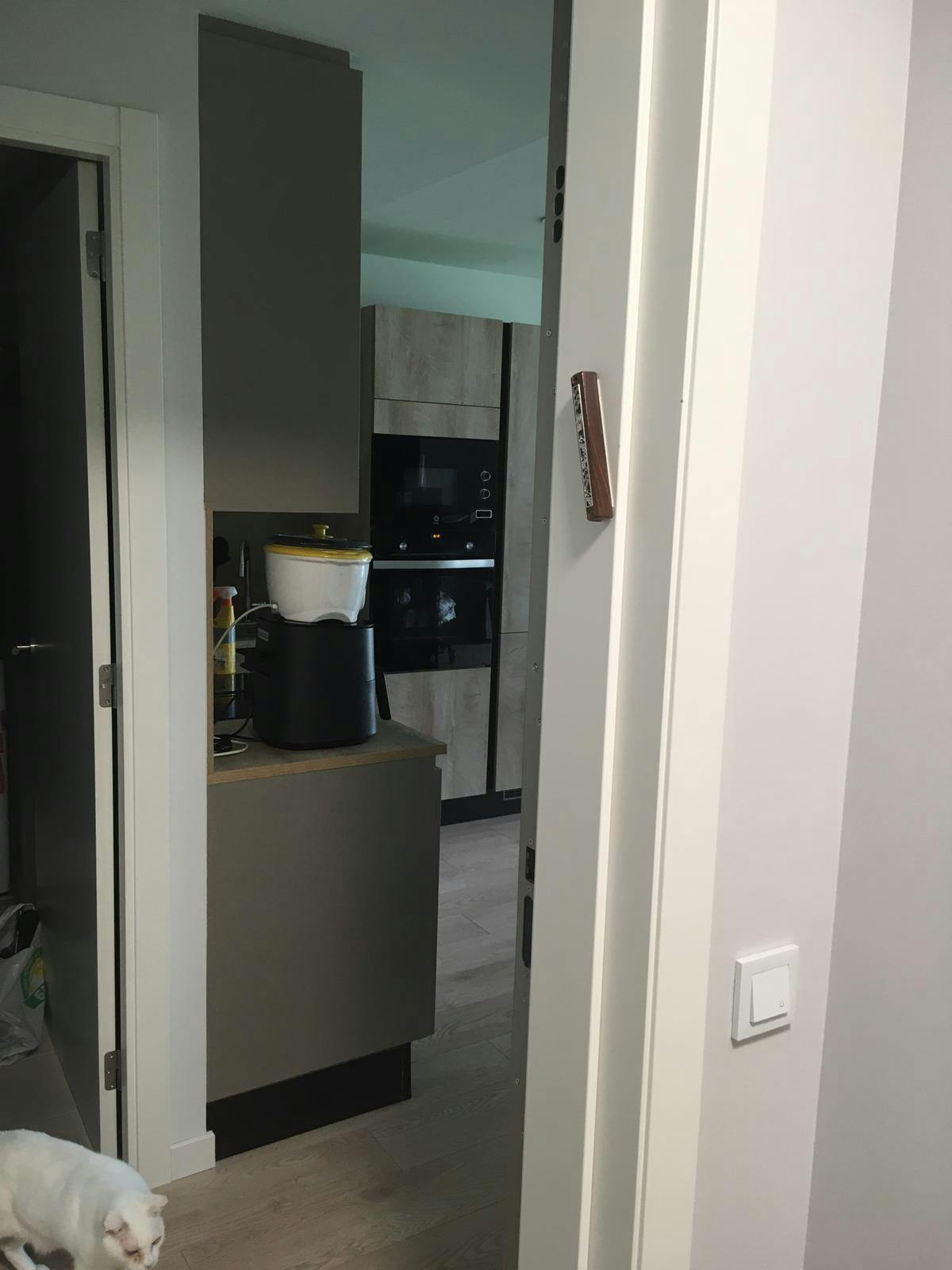
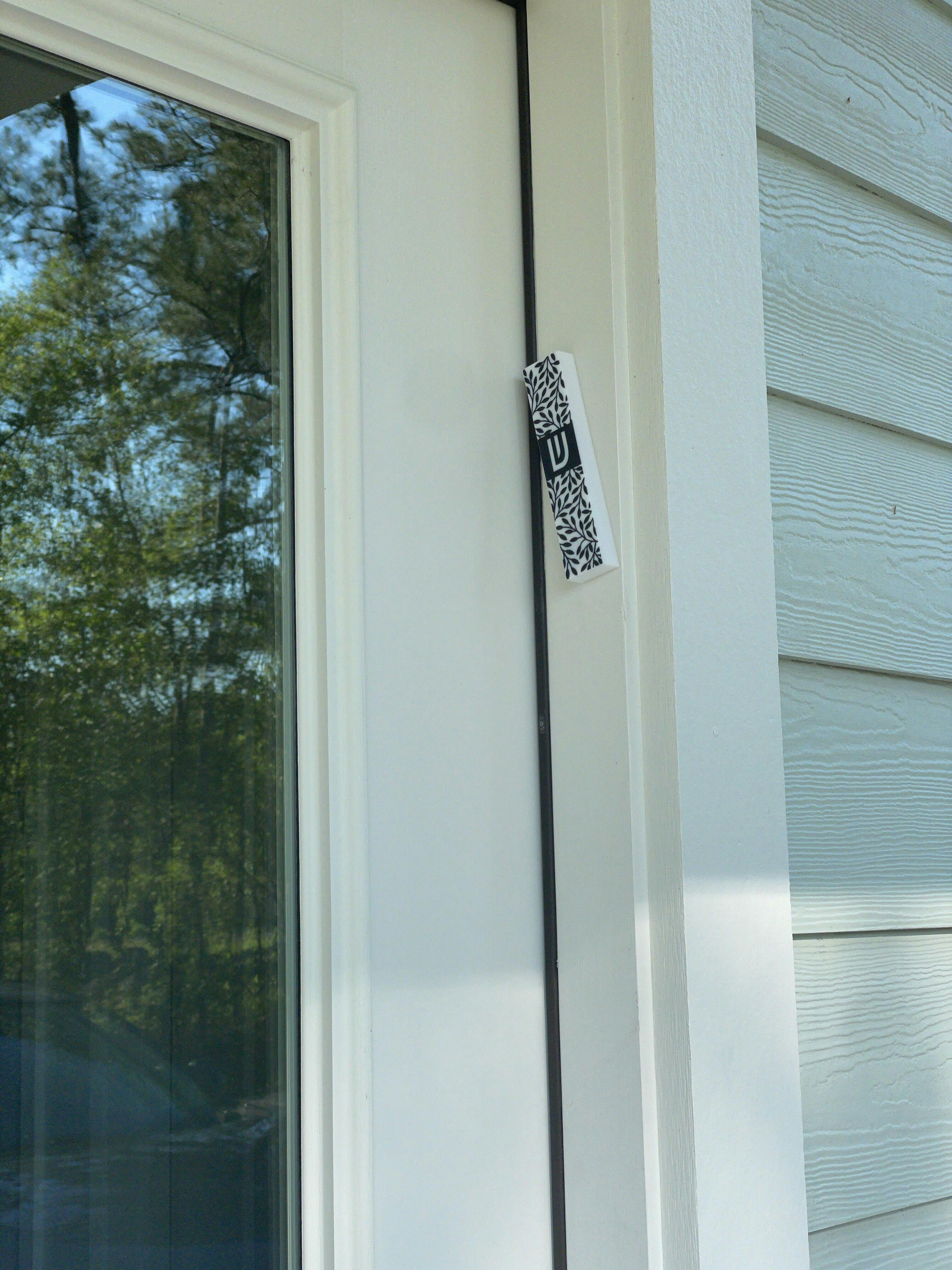
You may think that the answer to this question is simple...It goes on the right side. Indeed it is often that simple. For example the Mezuzah on the front door of your house will always be on the right side as you enter. 

Where it can get more confusing is with the Mezuzahs on the internal doors of your home. For example the door between the kitchen and the dining room or between the living room and the dining room. In a situation where you can move through your house in many different ways, it is not always clear which side of a door is the right side. 

WARNING: 

In this article I will give a very technical guide to how to determine the right side of any door in your home according to Halacha (Jewish Law). If you find it to be too confusing, don't panic, just call your local Rabbi and I am sure he will be happy to help you work it out.

Evaluate according to a list of criteria:

There is a list of factors that you must evaluate to determine which side of the door is the right side. You should evaluate the situation according to each one of these criteria in order. As soon as you have clearly met one of them, you can use that to determine which side is the right side and ignore the rest of the list. If the first one is not clear then move on to the second one. If it is not clear then move on to the third one etc. until you have a determination.

Here's the list:

Internal vs External - Look at the floor plan of your house. Consider how far-removed each room is from the outside of the house. Number each room according to how many stages removed it is from the outside. When it comes to the Mezuzah, we always go from an external room to an internal room. 

So if the door you are considering goes from a room which is 2 rooms removed from the outside to one which is 3 rooms removed, the Mezuzah will go on the right side entering the room which is 3 rooms removed. That is to say from the external room to the internal room. If both rooms are equal, move on to the next criteria...


Flow of Traffic - If it is clear to you that there is a certain common flow of traffic in between these rooms, then you would put the Mezuzah on the right side as you enter the way that is most common to enter. Only use this criteria if there is a clear flow of traffic. If it is not clear then move on to the next criteria...


Room Usage - Mezuzahs are meant to go on rooms that you "live in". So if one room is used more for "living" than that would be considered the room you are entering. For example, if there was a door between an office and a dining room, and all of the previous criteria were equal, you would place the Mezuzah on the right side as you enter the dining room. This is because eating is more of a basic function of a living space than working. If this is not clear, then move on to the next criteria...


Which way the door swings - If all of the above are equal then look at which way the door swings. You would place the Mezuzah on the right side of the room into which the door swings. Interestingly, according to the Chabad custom, you look at this last criteria first and only afterwards at the previous three. 

What if it is still not clear?

If you have carefully considered all of these things and both rooms are still 100% equal then you have a problem. I have actually never seen a situation like this in the real world, but in theory there is an argument in Halacha regarding what to do in such a situation.

One opinion says you would put the Mezuzah on whichever side you want. They say that the Torah isn't really concerned with the Mezuzah being on the right side. It is mainly concerned that it not be on the left side. In a case where there is no left side, you can put it on either side.

The second opinion is that you would put a Mezuzah on each side. 

We're here to help!

In any case, if you have such a situation, its probably time to call in the experts. Give a call to your local Rabbi or Torah Scribe. You can also always feel free to write me with any Mezuzah related questions and I will do my best to try to help you work them out. Aaron@MezuzahStore.com


Continue Reading ›

Shanah Tovah!

With the New Year almost upon us, all of us at MezuzahStore.com would like to wish you and your family a happy, healthy and sweet new year. May the coming year be one of good health, success and prosperity for you and your loved ones! 

Get 10% Off!

To celebrate the New Year of 5772, we are offering a coupon for 10% off your order, good till Simchat Torah. Use coupon code ShanahTovah to get your discount!


Continue Reading ›

1. Bring blessing into your home. 

Throughout the ages Jews have known that having Kosher Mezuzahs on all of one's doors is the key to bringing a special blessing and protection to the home. This is why when anything goes wrong in our home, the first thing we do is take the Mezuzah scrolls to have them checked. In order to gain the full benefit of this Divine blessing, we must make sure we have a kosher Mezuzah on every door which is obligated in one.

2. Show your Jewish pride.

It is one thing to have a little Mezuzah on your front door... but when you have Mezuzahs on all of your doors, it is sure to be a conversation starter with people who visit your home. This is a great way to show your Jewish pride.

3. Educate your children.

Today children are exposed to so many different ideas via television and the internet. In order to make sure to pass on the Jewish heritage to our children, we need to make sure that they have regular reminders that they are Jewish. When a child kisses Mezuzahs as he goes through the doors of his home many times a day, he is constantly reminded that being Jewish is important.

4. Keep up the tradition.

Stop for a second and think about this: For 2,000 years, the Jewish people have been in exile in foreign lands. We have always been a minority and we have been persecuted throughout most of history. If any one of your ancestors over the course of those 2,000 years had decided to give in and assimilate into the majority culture, you would not identify as Jewish today. What kept them Jewish was observing the Mitzvahs of the Torah despite persecution. We who live in a free country should not be the first ones to abandon these traditions!

5. It's a Mitzvah!

Last, and most importantly, it's a Mitzvah. Mitzvah is usually translated as 'good deed', but in actuality, it means 'commandment'. The commandments of the Torah are given for our benefit. When we keep them, it brings a blessing into our life.  There are many commandments in the Torah, and they are all important, but it is not an all-or-nothing proposition. Each Mitzvah has its own unique value. Once it has been performed, the light that it brings into the world can never be taken away.

Perhaps you are not ready to keep all of the Mitzvahs just yet, but having Mezuzahs on every door of your home is a one time expense which is a very good start in the right direction. Think of it as picking the low lying fruit first.

To find out more details about which doors are obligated to have a Mezuzah, read this article:

Which Rooms Need a Mezuzah?


Continue Reading ›
Today is the first day of Rosh Chodesh Elul. Every month in the Jewish calendar has a special focus. The focus of Elul is getting ready for the great and awesome day of Yom Kippur when we have all of our sins forgiven and cleansed if only we make proper preparation. 

This means that we now have 40 days (30 days of Elul and 10 days from Rosh Hashana to Yom Kippur) to prepare ourselves for the moment of Neilah at the end of Yom Kippur when every Jew places their soul in God's hands and asks that the coming year should be a good year.

The Kabbalists compare these 40 days to the 40 measures of water that are necessary to accomplish purification in a Mikveh (Ritual bath). If we spend some time each day focusing on making ourselves better and trying to correct our actions, then we will have the 40 measures required to accomplish purification.

Because of the great significance of these days, the Shofar is blown every day in the Synagogue to remind us to get ready. It is also customary to make an accounting of our Mitzvah performance. We try to fill in any Mitzvahs that we have not completed this year so that we can stand before God on Yom Kippur with our spiritual account in order.

One of the customs which is very widespread is to check our Mezuzahs and Tefillin during this month. Here is how it works:
  • The first thing that needs to be checked is that we indeed have Kosher Mezuzahs on each door of our house that requires one.
  • There may be rooms or doors which you are not sure if they require a Mezuzah or not. Please feel free to email me at aaron@mezuzahstore.com and I'll be happy to help you figure this out. Or better yet, post your question on our Facebook page so that others can benefit from the discussion.
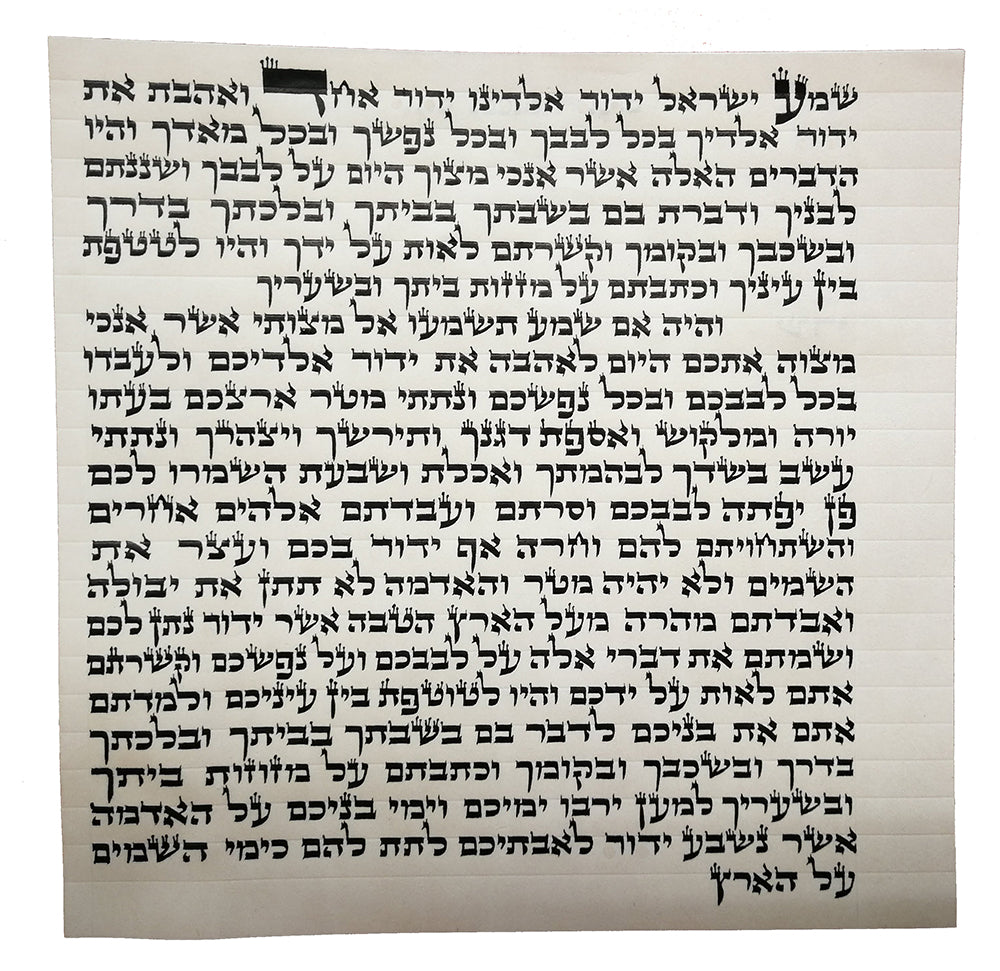
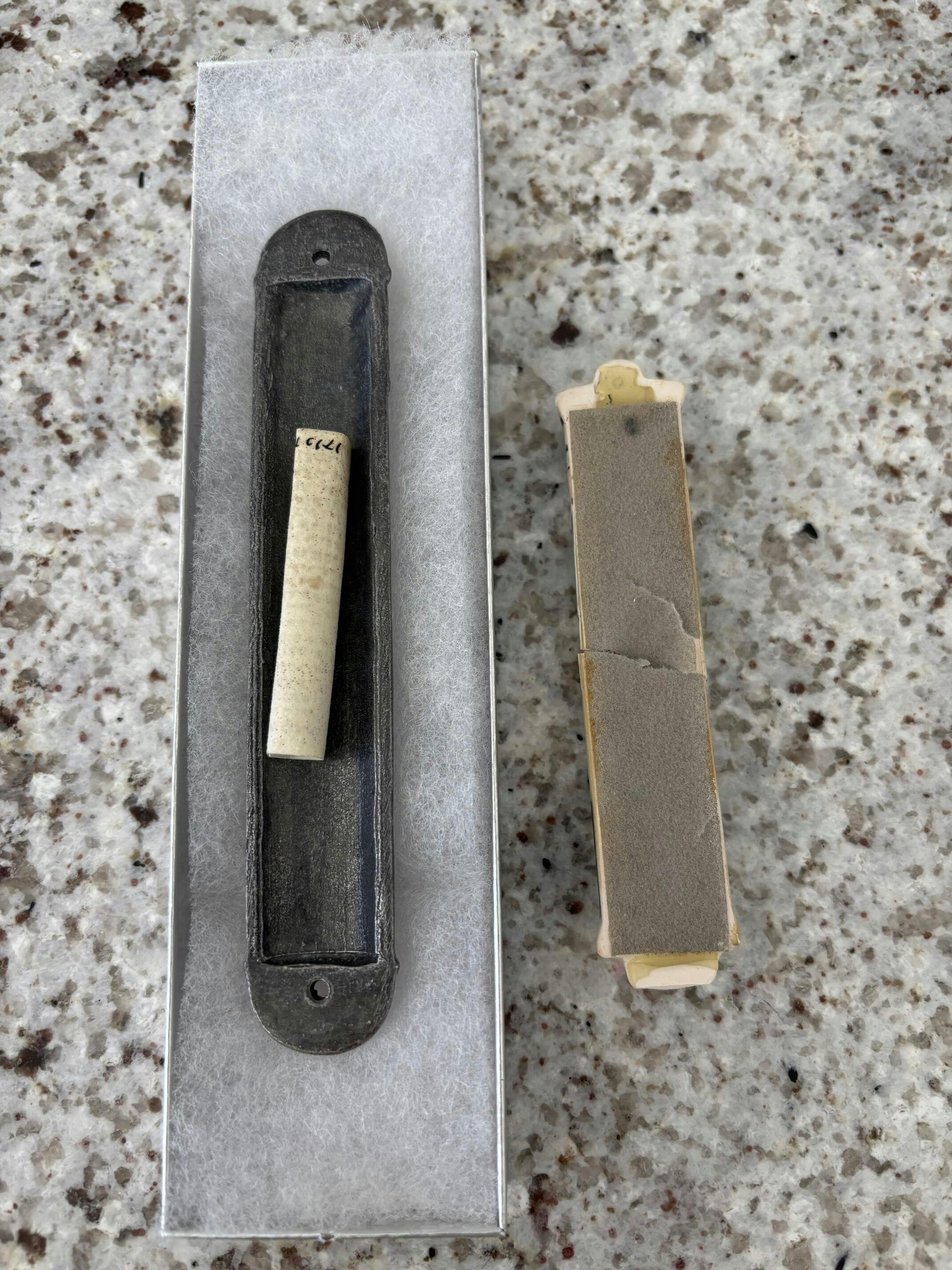
  • Next it is customary to remove your Mezuzahs and bring them to a certified Torah scribe to be inspected. Mezuzah scrolls are written on parchment which can dry out causing damage to the letters. The scribe will check them to make sure that none of the letters have cracked and that none of the scrolls have been damaged by weather. If you don't have a scribe near you, please call our store in Los Angeles at 310-278-4428 and we will be happy to instruct you about how to mail your scrolls in for checking. You are allowed to have your scrolls down for up to 30 days if necessary in order to have them checked.
As always, if you have any questions about Mezuzahs or Tefillin, I invite you to email me or post your question on our Facebook page and I will be happy to help you.

Wishing you, the entire Jewish People and the whole world a good, sweet year,

Aaron Shaffier


Continue Reading ›